
What really changes in day-to-day warehouse operations.

A new WMS sounds like a lot of effort for an uncertain benefit. That's why we show you here what actually changes, not in theory but in daily operations. Four things changed so fundamentally for us that we built our own system around them: transparency, scalability, efficiency and flexibility.
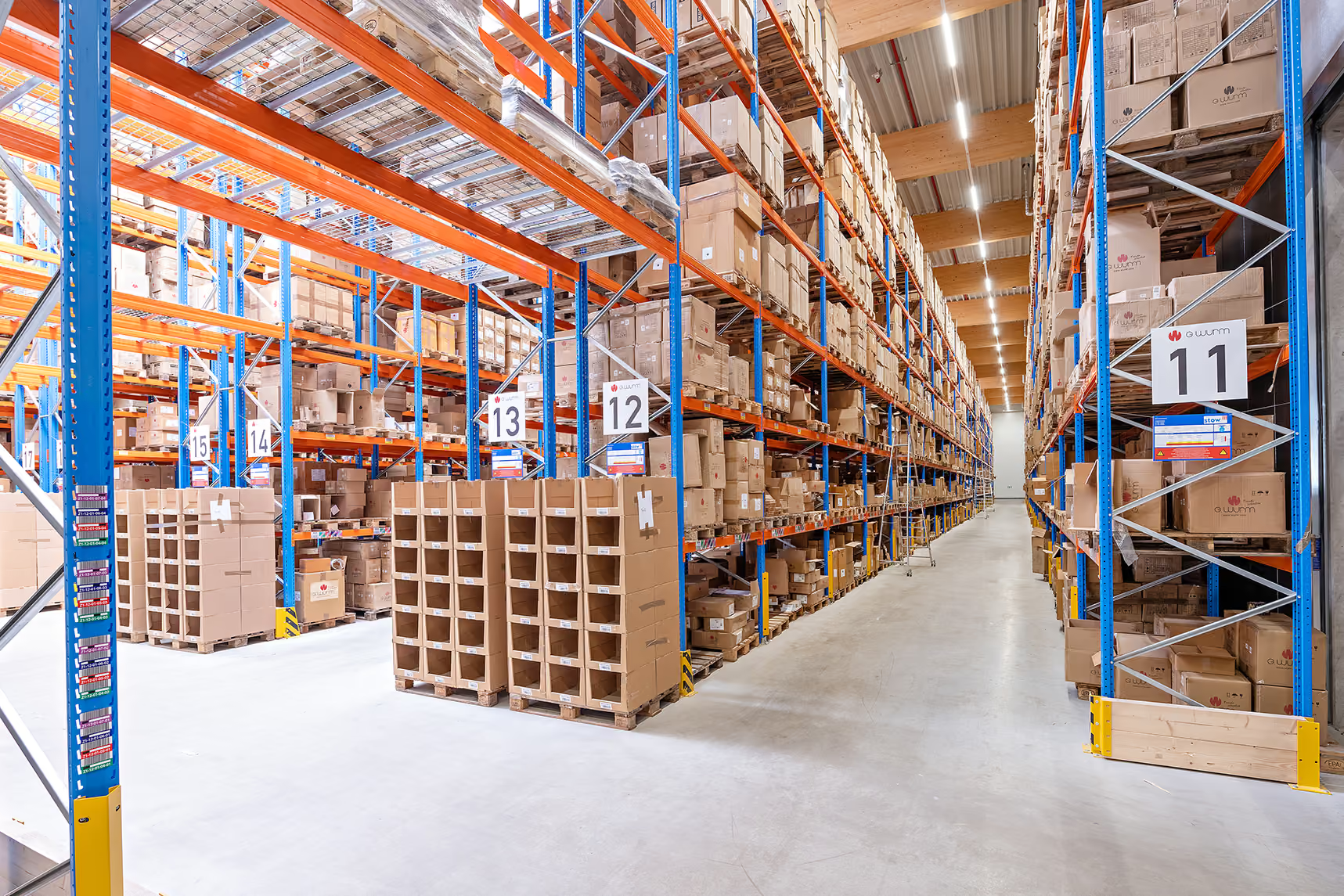
Großes Lager mit blauen und orangen Metallregalen, gefüllt mit vielen Kartons unterschiedlicher Größen, breiter heller Gang in der Mitte, Regale nummeriert von 11 bis 15.

Four changes for everyone who introduces Waretracks.

This was the basis for our own decision to build a WMS ourselves.

Transparency

Only the colleague with ten years of experience knows where an article is. Stock in the ERP rarely matches reality in the warehouse.

Every location has a unique address, every movement is recorded when scanned. Stock and status are available in real time, for everyone with access, not just for the one experienced colleague.

What this means in practice:
• Stock can be viewed in real time at any time, without asking
• Every article has a unique, traceable location
• Knowledge lives in the system instead of in individual workers' heads

Scalability

A new product range or more volume means improvising. Every growth step creates a new exception in someone's head.

New areas, channels and sites are mapped directly in the system, not improvised afterwards. The warehouse grows structurally instead of hitting its limits with every growth spurt.

What this means in practice:
• New warehouse areas and processes can be added without system breaks
• Additional range or volume doesn't create manual exceptions
• Structure is maintained even across multiple sites or channels

Efficiency

Duplicate entries, unoptimized routes, errors from shouted instructions instead of a system.

A transaction is recorded once and then processed end to end, without duplicate entries. System-guided picking shortens routes, scanning instead of shouting reduces errors.

What this means in practice:
• Shorter routes through optimized, system-guided picking
• Fewer sources of error through mandatory scanning instead of verbal handovers
• Less duplicate data entry, more time for the actual work

Flexibility

Every change goes through the provider or a ticket. A new picking strategy takes weeks.

Process ownership stays with your company. Changes to workflows, picking strategies or rules are made directly, without waiting for external capacity or a ticket.

What this means in practice:
• New picking strategies can be implemented in days instead of weeks
• Changes are handled internally, not through provider tickets
• The system grows with your own processes instead of limiting them

Decision guide by perspective

For owners and management
Ein einfaches, schwarzes Pluszeichen auf weißem Hintergrund.Screenshot of Google Maps showing a route from Zanzibar to Arusha in Tanzania with a 35-minute flight indicated and the map highlighting Tanzania and part of Kenya and Uganda.
I can give a reliable answer at any time without calling the warehouse.
I can plan growth without the warehouse becoming the bottleneck.
Time that used to go into rework is now available for growth.
I'm no longer at the mercy of my own warehouse system.
For warehouse managers
Ein einfaches, schwarzes Pluszeichen auf weißem Hintergrund.Screenshot of Google Maps showing a route from Zanzibar to Arusha in Tanzania with a 35-minute flight indicated and the map highlighting Tanzania and part of Kenya and Uganda.
I no longer have to fight fires when someone is sick or on vacation.
New processes can be introduced without the old ones collapsing.
Less searching, less coordinating, more throughput per day.
I can react to changes in daily business right away, not next month.
For IT
Ein einfaches, schwarzes Pluszeichen auf weißem Hintergrund.Screenshot of Google Maps showing a route from Zanzibar to Arusha in Tanzania with a 35-minute flight indicated and the map highlighting Tanzania and part of Kenya and Uganda.
One data source instead of manually reconciling two systems.
Structure instead of special workarounds nobody can follow later.
One less system break, one less source of error.
Less dependency on third-party tickets, more control over your own system landscape.

Five questions for an honest look at your warehouse.

+

Stock transparency

Do you know at any time, without asking, how much stock a specific article has right now?
+

Scalable growth

Could you double your warehouse volume tomorrow without your processes breaking down?
+

Efficient operations

Do you know how much time your team spent searching and asking around this week instead of picking?
+

Flexible processes

Can you implement a process change in the warehouse yourself, without waiting for an external provider?
+

Independence from individuals

If your most experienced warehouse worker is out tomorrow, will operations continue just the same?
If you answered no to even one of these questions, your warehouse needs action.
Let's make it concrete with a short Warehouse Check.
Grüner quadratischer Button mit einem weißen stilisierten Pfeil nach rechts in der Mitte.
Start the Warehouse Check

Still have questions?

Come by and see how Waretracks works in our own warehouse.
Grüner quadratischer Button mit einem weißen stilisierten Pfeil nach rechts in der Mitte.
Book a demo